
E Snagging

Uncategorized

Uncategorized

Why Every Real Estate Developer Needs Third-Party Snagging Before Project Handover

The success of a real estate development project is not measured solely by completing construction on time. It is equally important to deliver a property that meets high-quality standards and exceeds buyer expectations. Even well-managed projects can have hidden construction defects, incomplete finishes, or installation issues that become apparent only during the final stages of construction. For real estate developers in Oman, project handover is one of the most critical milestones. It is the moment when buyers inspect their new property and form lasting impressions about the developer’s commitment to quality. Discovering defects after handover can lead to warranty claims, project delays, customer dissatisfaction, and damage to a developer’s reputation. This is where third-party snagging inspection services for real estate developers play a crucial role. An independent snagging company provides an unbiased assessment of the property, identifying defects before the keys are handed over. In this article, we’ll explain why every real estate developer should invest in professional third-party snagging before project completion. What Is Third-Party Snagging? Third-party snagging is an independent inspection carried out by qualified professionals who are not involved in the construction or project management process. Unlike internal quality control teams, third-party inspectors evaluate every aspect of the property objectively, ensuring that construction meets approved specifications, industry standards, and client expectations. A comprehensive snagging inspection typically covers: Structural finishes Walls and ceilings Flooring and tiling Doors and windows Electrical systems Plumbing systems HVAC installations Waterproofing Joinery and cabinetry External works Safety features MEP systems The inspection results are documented in a detailed snagging report, allowing contractors to rectify issues before handover. Why Internal Quality Checks Alone Are Not Enough Most developers already have quality assurance (QA) and quality control (QC) processes in place. While these systems are essential, they often focus on construction progress, compliance, and contractor performance. An independent snagging inspection offers a fresh perspective because the inspectors have no involvement in the construction process. Their only objective is to identify defects that could affect quality, functionality, or customer satisfaction. Third-party inspectors often identify issues that may be overlooked due to: Familiarity with the project Tight construction schedules Multiple subcontractors Communication gaps Pressure to meet handover deadlines Independent inspections provide an additional layer of quality assurance that benefits both developers and buyers. 1. Deliver Higher Construction Quality Quality is one of the biggest factors influencing a developer’s reputation. Even minor defects such as chipped tiles, uneven paint finishes, loose fixtures, or improperly aligned doors can create a negative impression during handover. Third-party snagging ensures that every room, system, and finish is inspected carefully before the property reaches the buyer. Benefits include: Better workmanship Fewer visible defects Improved finishing quality Higher construction standards More professional project delivery Delivering a defect-free property demonstrates a developer’s commitment to excellence. 2. Reduce Costly Rework After Handover Construction defects become significantly more expensive to repair once the property has been handed over. Post-handover repairs often involve: Scheduling additional site visits Coordinating multiple contractors Occupant inconvenience Material replacement Administrative costs Identifying defects before handover allows contractors to complete repairs while equipment, labour, and materials are already available on site. Early corrections are faster, simpler, and far less expensive. 3. Minimize Warranty Claims Every warranty claim requires time, resources, and coordination. Common warranty issues include: Water leakage Cracked tiles Electrical faults Plumbing leaks HVAC performance issues Poor finishing Professional snagging helps identify these problems before buyers move in, reducing the number of warranty requests developers receive during the defect liability period. Fewer warranty claims translate into: Lower maintenance costs Reduced service calls Improved operational efficiency Better customer satisfaction 4. Improve Customer Satisfaction Property buyers expect a new home or commercial space to be delivered in excellent condition. A smooth handover experience creates confidence in the developer and reduces the likelihood of complaints. When buyers receive a property with minimal defects, they are more likely to: Recommend the developer Leave positive reviews Purchase future projects Build long-term trust Customer satisfaction is one of the strongest drivers of repeat business in the real estate industry. 5. Protect Your Brand Reputation In today’s digital world, customer experiences spread quickly through online reviews, social media, and property forums. Repeated complaints about poor workmanship can negatively impact a developer’s reputation and influence future sales. Third-party snagging demonstrates that the developer prioritizes quality and transparency throughout the project lifecycle. A reputation for delivering high-quality properties becomes a valuable competitive advantage in Oman’s growing real estate market. 6. Speed Up the Project Handover Process Many project handovers are delayed because defects are discovered at the last minute. Independent snagging inspections conducted before final handover provide contractors with enough time to complete corrective work. This helps developers: Avoid unexpected delays Improve project coordination Complete handovers on schedule Reduce disputes during inspections A structured snagging process creates a smoother transition from construction to occupancy. 7. Ensure Better Coordination Between Contractors Modern developments involve multiple contractors working simultaneously. These may include: Civil contractors Electrical contractors Plumbing specialists HVAC installers Joinery teams Waterproofing contractors Landscaping contractors Third-party snagging helps identify which contractor is responsible for each defect, making corrective actions more organized and efficient. This reduces confusion and improves accountability across the project. 8. Comprehensive Documentation for Better Quality Control One of the greatest advantages of professional snagging is detailed documentation. A professional snagging report typically includes: Photographs of defects Exact defect locations Severity levels Recommended corrective actions Room-by-room inspection summaries Progress tracking These reports provide developers with a clear roadmap for completing rectification work before project completion. They also create valuable documentation for future quality management. 9. Ensure Compliance with Project Specifications Construction projects involve approved drawings, specifications, manufacturer recommendations, and industry best practices. Third-party inspectors verify whether installations comply with these requirements. Typical checks include: Floor level consistency Door alignment Window operation Waterproofing quality Electrical installations Mechanical systems Plumbing functionality Fire safety installations This additional verification helps developers deliver projects that meet expected quality standards. 10. Gain a Competitive Advantage The real estate market in Oman continues to evolve, with buyers
Uncategorized

Common AC Cooling Problems Found During Snagging Inspections

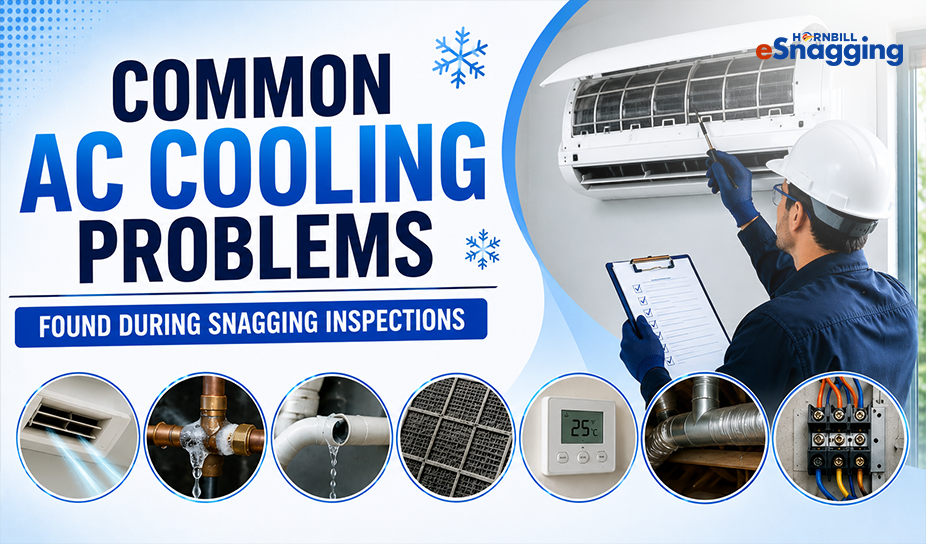
In Oman’s hot climate, air conditioning is not a luxury — it is an essential part of everyday comfort. Whether it is a newly constructed villa, apartment, office, or commercial property, buyers expect the AC system to function efficiently from day one. However, many newly handed-over properties contain hidden cooling issues that are often missed during construction. This is where snagging inspections become extremely important. A professional snagging inspection helps identify defects, installation mistakes, and performance problems before the property handover is finalized. Among the most common issues detected during snagging inspections in Oman are AC cooling problems, which can lead to discomfort, higher electricity bills, water leakage, poor indoor air quality, and expensive repairs later. According to the U.S. Department of Energy, heating and cooling systems account for nearly 50% of energy use in many buildings, making HVAC efficiency critical for both comfort and operational cost savings (Source). In Oman’s extreme temperatures, even small AC defects can quickly become major problems if left unresolved. In this blog, we explore the most common AC cooling problems found during snagging inspections and why professional inspections are essential before moving into a new property. Why AC Inspection is Important During Property Snagging Many property owners assume that a new building automatically means a perfect AC system. Unfortunately, that is not always the case. Construction deadlines, poor workmanship, improper installation, and lack of testing often result in HVAC defects that remain unnoticed until the property is occupied. AC-related snagging inspections help identify: Cooling inefficiency Improper installation Water leakage Airflow problems Electrical defects Poor insulation Hidden maintenance issues Detecting these issues early can save significant repair costs and improve long-term HVAC performance. Common AC Cooling Problems Found During Snagging Inspections 1. Weak or Uneven Cooling One of the most common complaints in newly handed-over properties is inconsistent cooling across rooms. During snagging inspections, inspectors often identify: Poor airflow Incorrect AC sizing Blocked vents Duct leakage Improper thermostat placement Some rooms may feel excessively cold while others remain warm. This usually indicates airflow imbalance or duct installation issues. According to HVAC industry reports, blocked or leaking ducts can significantly reduce cooling efficiency and increase energy consumption. Common Signs: Certain rooms cool slower Weak airflow from vents Hot spots inside the property AC running continuously without proper cooling 2. Refrigerant Leaks Refrigerant is essential for cooling performance. Low refrigerant levels usually indicate leakage within the AC system. Refrigerant leaks are among the most frequently discovered HVAC defects during inspections. These leaks may occur because of: Poor pipe connections Damaged copper tubing Improper installation Manufacturing defects The U.S. Department of Energy states that refrigerant leaks reduce efficiency, damage compressors, and negatively impact system performance (Source). Common Signs: Warm air from vents Ice formation on pipes Hissing sounds Higher electricity usage Reduced cooling performance In Oman’s climate, refrigerant-related issues can quickly become severe because AC systems operate for long hours throughout the year. 3. Improper AC Drainage and Water Leakage Water leakage around indoor AC units is another common issue detected during snagging inspections. Air conditioners produce condensation during cooling, and this water must drain properly through condensate lines. Poor installation or clogged drain lines can result in: Water leakage Ceiling stains Wall damage Mold growth Unpleasant odors Experts identify clogged condensate drains as one of the most common HVAC maintenance problems. Common Signs: Water dripping from indoor units Damp ceilings or walls Musty smells Excess humidity indoors In newly constructed buildings, drainage slope errors and improper piping are frequently responsible for these problems. 4. Dirty or Blocked Air Filters Although filters may seem like a minor component, clogged or dirty filters can significantly affect cooling performance. Construction dust often accumulates inside AC filters before the property handover is completed. During snagging inspections, dirty filters are commonly found in properties that were not properly cleaned after construction work. Blocked filters can cause: Reduced airflow Increased energy consumption Poor indoor air quality Overworked AC systems HVAC experts consistently identify dirty filters as one of the most common causes of cooling inefficiency. Common Signs: Weak airflow Dust accumulation indoors Increased cooling time Unusual AC strain or noise 5. Faulty Thermostat Installation Thermostats control indoor temperature, but incorrect installation can lead to inaccurate readings and inconsistent cooling. Common snagging issues include: Thermostat placed near sunlight Incorrect calibration Wiring defects Faulty sensor positioning Improper thermostat placement can cause the AC system to cycle incorrectly, leading to poor comfort and higher electricity costs. Common Signs: Incorrect room temperature readings AC turning on and off frequently Rooms feeling warmer than the thermostat setting 6. Ductwork Defects and Air Leakage Duct systems distribute cooled air throughout the property. During snagging inspections, inspectors frequently discover: Loose duct connections Air leakage Poor insulation Crushed ducts Improper duct sizing These issues reduce airflow efficiency and force the AC system to work harder. Industry reports indicate that damaged or leaking ductwork contributes significantly to cooling inefficiency and uneven temperature distribution. Common Signs: Uneven cooling Dust buildup Higher energy bills Noise inside ceilings or ducts 7. Incorrect AC Unit Sizing Proper AC sizing is critical in Oman due to the high outdoor temperatures. An undersized AC unit struggles to cool the space efficiently, while an oversized unit cycles too quickly and fails to remove humidity effectively. During snagging inspections, inspectors sometimes identify systems that were incorrectly selected for the room size or building layout. Problems Caused by Incorrect Sizing: High electricity bills Poor comfort levels Increased wear and tear Reduced system lifespan Inadequate heating and cooling caused by improperly sized HVAC systems is a commonly reported issue in building inspections. 8. Electrical and Wiring Problems HVAC systems rely heavily on electrical components. Poor electrical work can create safety hazards and performance failures. Inspectors commonly find: Loose electrical connections Improper wiring Faulty breakers Poor insulation Corroded terminals Electrical failures are considered one of the most serious HVAC issues because they can cause system breakdowns or even fire risks. Common Signs: AC not turning on Frequent tripping Burning smell Intermittent cooling

Uncategorized

MEP Snagging Checklist: Electrical, Plumbing & HVAC Inspection Guide

In Oman’s fast-growing real estate and construction sector, ensuring the quality and safety of a property before handover is critical. While many buyers focus on visible finishes like paint and flooring, the most important systems often remain hidden—MEP (Mechanical, Electrical, and Plumbing). MEP systems are the backbone of any building. Poor installation or overlooked defects can lead to costly repairs, safety hazards, and long-term maintenance issues. This is where a detailed MEP snagging inspection becomes essential. In this blog, we provide a complete MEP snagging checklist, helping property owners, developers, and investors in Oman identify critical issues before final handover. What is MEP Snagging? MEP snagging is the process of inspecting and identifying defects in a building’s mechanical, electrical, and plumbing systems before project completion or property handover. The goal is to ensure: Systems are installed correctly They function efficiently They meet safety and regulatory standards Why MEP Snagging is Important in Oman Due to Oman’s extreme temperatures, dust, and humidity, MEP systems face additional stress. Poor-quality installations can result in: AC system failures during peak summer Water leakage and pipe corrosion Electrical faults and fire hazards Increased energy and water consumption A proper MEP snagging inspection helps avoid these risks and ensures long-term performance. Complete MEP Snagging Checklist 1. Electrical Snagging Checklist Electrical systems must be safe, efficient, and compliant. Distribution Board (DB) Proper labeling of circuits No exposed wiring Secure installation Correct load distribution Switches & Sockets All switches functioning properly No loose fittings Proper alignment Adequate number of outlets Lighting Fixtures All lights operational No flickering Proper installation Energy-efficient lighting Wiring & Cabling No exposed wires Proper insulation Organized cable management Earthing & Safety Proper grounding Functional circuit breakers RCDs installed Common Electrical Issues in Oman: Overheating due to poor wiring Loose connections causing fluctuations Improper earthing 2. Plumbing Snagging Checklist Plumbing systems ensure proper water supply and drainage. Water Supply System Consistent water pressure No leaks Proper insulation Drainage System Smooth flow No blockages Proper slope Sanitary Fixtures Proper installation No cracks or leaks Secure fittings Water Heaters Proper installation No leakage Safe connections Pipes and Valves No corrosion Functional valves Proper sealing Common Plumbing Issues in Oman: Pipe leakage due to heat Poor drainage design Low water pressure 3. HVAC (Air Conditioning & Ventilation) Checklist Air Conditioning Units Proper installation Efficient cooling No unusual noise Airflow & Ventilation Even airflow Clean vents Proper circulation Ductwork No leaks Proper insulation Secure connections Thermostats Accurate temperature control Proper calibration AC Drainage No water leakage No clogging Common HVAC Issues in Oman: Poor cooling efficiency AC water leakage Dust buildup High energy usage Common MEP Defects Found During Snagging Improper electrical installations Hidden water leaks Faulty AC units Poor insulation Non-compliance with safety standards DIY vs Professional MEP Snagging DIY Inspection Basic checks only Limited knowledge May miss hidden issues Professional Snagging Detailed inspection Advanced tools used Accurate issue detection Full report provided Tips for a Successful MEP Inspection Inspect before handover Test systems in real conditions Check compliance Document issues with photos Ensure all defects are fixed Benefits of MEP Snagging Ensures safety Reduces maintenance cost Improves efficiency Increases property value Provides peace of mind Conclusion MEP systems are critical but often overlooked. A thorough snagging inspection ensures your property is safe, efficient, and ready for use. In Oman’s harsh climate, even small defects can become major problems. That’s why proper MEP inspection is essential. For reliable and professional inspections, choose eSnagging Service by Hornbill—your trusted partner for quality property handover in Muscat, Oman.

Uncategorized

Hidden Construction Defects in Schools: Why Snagging Is Essential Before Students Move In

When a new school building is completed, it often looks impressive — fresh paint, modern classrooms, new furniture, and upgraded facilities. However, beneath the surface, hidden construction defects may exist. These defects are not always visible during a casual walkthrough, but they can create safety risks, operational disruptions, and long-term maintenance costs. For educational institutions in Muscat, where new private schools, nurseries, and training centers are rapidly expanding, conducting professional snagging inspections before occupancy is not just recommended — it is essential. This blog explores a critical issue: hidden construction defects in educational institutions and how professional snagging provides the solution. The Growing Concern: Hidden Defects in Newly Built Schools Many educational buildings are handed over under tight construction deadlines. Contractors rush to complete projects before the academic year begins. While the building may appear finished, detailed inspections often reveal underlying issues such as: Poor waterproofing in the washrooms Electrical overload risks Uneven flooring Faulty HVAC systems Improper fire safety installations In a residential building, such defects are inconvenient. In a school, they can be dangerous. Why Schools Are More Vulnerable to Construction Issues Educational institutions differ from other commercial properties because they: Accommodate large numbers of children Experience heavy daily foot traffic Require high safety compliance Operate for extended hours Children are naturally active — running through corridors, using staircases frequently, and interacting with classroom fixtures. Even minor defects can quickly escalate into serious hazards. For example: A loose stair railing can lead to accidents. Slippery tiles in the washrooms can cause injuries. Faulty electrical sockets can create fire risks. This is why snagging for educational institutions must go beyond cosmetic inspection. Common Hidden Issues Found During School Snagging Professional snagging inspections in schools frequently uncover issues that were not visible during handover. 1. Structural and Civil Defects Hairline cracks in walls Uneven stair dimensions Poor plaster finishing Hollow floor tiles While these may seem minor, structural issues can worsen over time and compromise safety. 2. Electrical Safety Risks Electrical systems in schools must handle: Classroom lighting Smart boards Lab equipment Air conditioning units Common snagging findings include: Loose wiring Improper earthing Inadequate load distribution Poorly installed switchboards Such issues increase fire risk and equipment damage. 3. Plumbing and Waterproofing Failures Washrooms in schools are high-usage areas. Poor waterproofing can lead to: Water seepage Mold growth Structural weakening Unpleasant odors Snagging inspections often reveal drainage slope problems and hidden leaks that are not immediately visible. 4. HVAC and Ventilation Problems Proper ventilation is critical in classrooms. However, inspections often find: Uneven cooling AC water leakage Blocked ducts Poor airflow circulation Inadequate ventilation affects both comfort and student concentration. 5. Fire Safety Non-Compliance Fire safety is one of the most critical aspects of any educational building. Yet, snagging inspections sometimes uncover: Non-functional alarm systems Improperly installed fire extinguishers Blocked emergency exits Faulty smoke detectors Even one overlooked fire safety issue can have serious consequences. The Consequences of Ignoring Snagging in Schools 1. Safety Incidents Injuries due to construction defects can lead to liability issues and reputational damage. 2. Unexpected Repair Costs Post-occupancy repairs are more expensive and disruptive, especially once classes have begun. 3. Operational Interruptions Imagine shutting down classrooms mid-term due to plumbing failure or electrical issues. 4. Parent Trust Issues Parents expect a safe environment for their children. Visible maintenance problems can affect institutional credibility. Preventive snagging eliminates these risks before they escalate. The Solution: Professional Snagging Before Handover A structured snagging inspection acts as a quality assurance process before students and staff occupy the building. Professional snagging for educational institutions includes: Detailed room-by-room inspection Technical testing of electrical systems Plumbing and drainage checks Fire safety verification Structural assessment HVAC performance testing Outdoor play area inspection Each defect is documented with photographic evidence and a clear rectification recommendation. When Should Schools Conduct Snagging? To ensure maximum benefit, snagging should be conducted: Before final contractor payment Before furniture installation Before student occupancy After major renovation projects This allows sufficient time for corrections without disrupting academic operations. Renovations and Expansion Projects Also Need Snagging Many schools in Muscat expand gradually — adding new wings, laboratories, or auditoriums. Renovation projects are equally prone to construction oversights. Snagging after renovation ensures: Seamless integration with existing structures Safe electrical extensions Proper waterproofing in added sections Consistent finishing quality Even partial upgrades require professional quality verification. A Preventive Approach to Facility Management Educational institutions are long-term investments. A preventive quality inspection strategy reduces: Maintenance frequency Emergency repair costs Infrastructure deterioration By identifying hidden issues early, schools can maintain a safe and professional learning environment for years. Building a Safer Learning Environment The purpose of a school building is not just to house classrooms — it is to create a secure, comfortable space where students can focus on learning. A visually appealing building does not guarantee construction quality. Hidden defects, if left unchecked, can compromise safety, disrupt operations, and increase long-term costs. Professional snagging ensures that: Safety standards are met Construction quality is verified Contractors fulfill their obligations Institutions open with confidence Conclusion Hidden construction defects in educational institutions are a serious concern that should never be overlooked. From electrical hazards to waterproofing failures, these issues can impact safety, operations, and reputation. Conducting a professional snagging inspection before occupancy is the smartest step any educational institution can take. It protects students, staff, management, and long-term investment. If you are managing or constructing a school, college, nursery, or training center in Muscat, ensure your building meets the highest safety and quality standards. Choose Esnagging – Snagging Services by Hornbill for comprehensive, professional snagging inspections that safeguard your educational facility before its doors open.

Uncategorized

MEP & Hygiene Defect Prevention in Healthcare

Healthcare construction requires exceptional precision because even small hidden defects can impact patient safety, clinical operations, and long-term maintenance. Areas like MEP snagging systems in Oman, hygiene-sensitive zones, and safety installations demand strict quality control throughout the build. Using structured snagging and the factory commissioning snag tool from eSnagging helps ensure no detail is overlooked, reducing risks and improving overall facility reliability. Strengthening MEP Quality to Avoid Hidden Failures Mechanical, Electrical, and Plumbing systems form the backbone of any healthcare facility. Hidden issues such as HVAC contamination, faulty wiring, incorrect water pressure, or poor insulation can disrupt medical services. With eSnagging’s digital inspection capabilities, contractors and facility teams can identify concealed MEP defects early and ensure systems meet healthcare-grade standards. Ensuring Hygiene Compliance in High-Risk Zones Spaces like ICUs, operating theatres, isolation rooms, and laboratories require seamless finishes and infection-control-compliant construction. Hidden defects such as improper sealing, moisture pockets, or poor surface finishing can create serious hygiene risks. Using eSnagging tools helps teams track hygiene-related snags, verify workmanship, and maintain strict cleanliness and infection-control measures throughout the build. Safety-Focused Snagging for Staff and Patient Protection Healthcare facilities depend on flawless safety systems, from fire protection and emergency exits to air-pressure controls and accessibility features. Even minor hidden issues like misaligned fixtures, blocked ducts, or uneven flooring can endanger staff and patients. With eSnagging, teams gain real-time oversight of safety snags, enabling faster coordination and safer handovers. Why Digital Snagging Matters in Healthcare Projects Healthcare builds involve complex compliance requirements and must meet rigorous operational standards. Digital snagging tools in Oman, such as M-line documentation, enhance accountability and ensure hidden defects across MEP, hygiene, and safety areas are detected early and resolved efficiently. Preventing hidden defects in healthcare construction requires a proactive, highly detailed approach. By focusing on MEP accuracy, hygiene excellence, and robust safety standards, project teams can deliver facilities that are safe, efficient, and long-lasting. Leveraging digital snagging solutions in Oman from eSnagging ensures every issue is captured and corrected, resulting in a higher-quality build and smoother operational performance for healthcare environments.

Uncategorized

Differences between Residential snagging vs Healthcare facility snagging

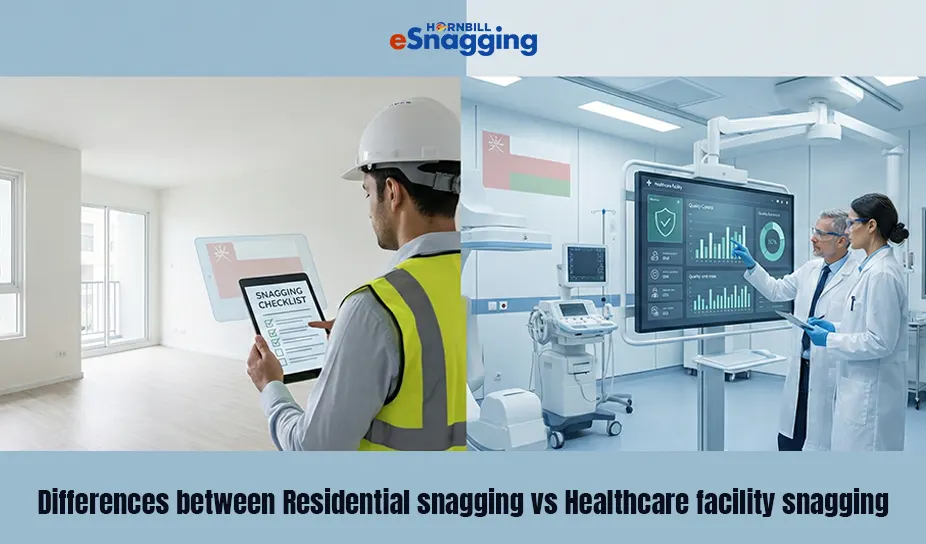
Snagging is a critical step in the construction handover process, ensuring that a building is safe, functional, and free from defects before it is occupied. While the basic aim remains the same across all sectors, the level of detail, risk, and regulatory responsibility can vary greatly between residential, commercial, and healthcare facilities. With professional services like eSnagging Snagging services Oman, property owners and developers can ensure that every type of project receives the appropriate level of inspection, documentation, and quality control based on its intended use. Residential snagging service Oman focuses mainly on identifying visible and functional defects before handover, but the scope and risk level differ. In residential projects, snagging typically covers finishes such as paintwork, flooring, doors, windows, plumbing fixtures, lighting, and overall workmanship that affects comfort and aesthetics. Commercial snagging is more complex, requiring detailed checks of large-scale systems like HVAC, fire alarms, emergency lighting, elevators, electrical infrastructure, and safety compliance. With eSnagging, both residential and commercial inspections are managed digitally, ensuring clear documentation, photographic evidence, issue prioritisation, and structured de-snagging to confirm that every defect is resolved efficiently before final handover. Healthcare-facility snagging is significantly more critical than standard residential or commercial snagging because it directly impacts patient safety and operational reliability. Along with general construction defects, inspections must include specialised systems such as medical gas pipelines, ventilation and air filtration systems, sterile zones, drainage and infection-control measures, and backup power supplies. Even minor issues like gaps in flooring joints, cracks in walls, or poorly sealed surfaces can become health risks in clinical environments. eSnagging healthcare facility inspections apply a higher level of technical expertise and attention to detail when inspecting hospitals, clinics, and laboratories, ensuring that installations meet healthcare-specific standards and regulatory requirements. Documentation, testing, and compliance are also far more rigorous in healthcare snagging compared to residential or commercial projects. Reports often need to support licensing, audits, or accreditation processes, meaning accuracy and traceability are essential. While residential and commercial snagging reports mainly help owners and developers close out construction, healthcare snagging reports act as a critical risk-management tool. Through advanced digital reporting, systematic tracking, and specialist knowledge, eSnagging supports developers and facility managers in achieving safe, compliant, and fully functional healthcare environments ready for immediate use. Understanding the differences between residential, commercial, and healthcare snagging is essential for delivering a space that meets both performance and safety expectations. Healthcare facilities, in particular, demand a much higher degree of precision due to their life-safety implications and strict compliance standards. By choosing a specialised solution such as eSnagging healthcare Snagging Services in Oman, stakeholders can streamline the snagging and de-snagging process, reduce risks, and achieve a smooth, compliant, and defect-free handover for even the most complex environments.

Uncategorized

How a Hotel Room Snagging Tool Improves Guest Experience in Oman

In Oman’s fast-growing hospitality sector, maintaining exceptional quality is essential to meet the expectations of both local and international guests. With the country’s booming tourism industry and rapid hotel development, ensuring that each room is in perfect condition before a guest checks in has become a top priority. This is where hotel room snagging tools come into play. A digital snagging solution, such as the one offered by eSnagging Hospitality Sector Snagging Services in Oman, helps hotel teams perform detailed room inspections, identify defects, and maintain consistent service quality across all properties. Why Oman’s Hospitality Sector Needs It Oman’s hospitality sector is booming — hotels in the 3–5 star category have posted strong growth in both guest numbers and revenues. Guests expect flawless rooms — no leaks, no furniture damage, and perfect air-conditioning. With nearly 9,600 new hotel rooms expected by 2030, inspection and maintenance demands are increasing dramatically. Manual checklists and paper logs can’t keep pace, especially across multiple properties or large hotel chains. What Is a Hotel Room Snagging Tool? A hotel room snagging tool is a software application (mobile + web) that enables hotel operations, maintenance, and quality teams to carry out seamless inspections and manage issues digitally. It replaces manual checklists with a smarter, data-driven approach that ensures every room meets hospitality standards before guests arrive. Conduct room inspections (pre-arrival, turnover, deep-clean) using digital checklists. Capture photos, timestamps, and room-specific data for better traceability. Identify defects like damaged furniture, leaking taps, malfunctioning AC, or stained carpets. Prioritise snags (Critical / Major / Minor), assign to technicians, and track repair status. Generate reports, analytics, and trend data to identify recurring issues and cost drivers. Integrate with Property Management Systems (PMS) and maintenance workflows. Support multilingual use (English & Arabic) — ideal for hotels in Oman. How a Hotel Room Snagging Tool Benefits Hotels in Oman Hotel Room Snagging Tool Oman simplifies the inspection process by providing a structured checklist for every aspect of the room — from electrical fittings and plumbing to furniture, décor, and safety equipment. Through this digital process, inspectors can capture photos, assign repair tasks instantly, and monitor completion in real time. This level of visibility not only reduces manual errors but also shortens response times for maintenance teams. For hotels in Oman, where guest satisfaction directly impacts online reviews and brand reputation, using a room inspection system ensures every room is guest-ready before occupancy. Enhancing Efficiency Through Digital Transformation Digital snagging tools improve operational efficiency by transforming traditional paper-based checklists into automated workflows. Maintenance teams can view defects instantly, track progress, and share updates across departments — ensuring quick resolution and better accountability. Real-time issue tracking and instant notifications for faster repairs. Centralized dashboard for management to monitor quality metrics. Reduced communication gaps between housekeeping, maintenance, and front office teams. Accurate data analytics for trend analysis and preventive maintenance planning. Over time, the data collected from inspections offers valuable insights into recurring issues, helping management plan preventive maintenance and avoid costly breakdowns. This proactive approach not only saves time and resources but also ensures that guests enjoy a comfortable, flawless stay. Conclusion In Oman’s rapidly expanding hospitality market, guest expectations are high, and room readiness is critical. By deploying a hotel room snagging tool such as eSnagging’s Hospitality Sector Snagging Services in Oman, hotel operations can ensure that inspection workflows, defect resolution, and data analytics work together to deliver consistently excellent guest experiences. The results speak for themselves: higher guest satisfaction, better online reviews, reduced maintenance costs, and a stronger brand reputation. As the hospitality industry in Oman continues to grow, adopting digital snagging tools is the smartest way for hotels to maintain quality, efficiency, and trust.

Uncategorized

Why Specialised Snagging is Important for Healthcare Facilities in Oman

In Oman’s growing healthcare sector, the quality and safety of hospitals, clinics, and medical centers are crucial. That’s where specialized snagging from eSnagging Snagging Services Oman makes a difference—ensuring every detail of a healthcare facility meets the highest standards before it opens its doors to patients. Healthcare facilities demand the highest standards of safety, hygiene, and functionality. In Oman’s rapidly developing healthcare sector, healthcare facility inspection snagging plays a vital role in ensuring hospitals, clinics, and medical centers are ready for patient care from day one. Precision Beyond Regular Construction Unlike standard commercial projects, healthcare facilities involve complex systems such as medical gas lines, sterile areas, MEP (mechanical, electrical, and plumbing) installations, and infection-control finishes. eSnagging provides detailed inspections to identify even the smallest defects that could affect patient safety or operational efficiency. Meeting Oman’s Health Standards The Ministry of Health (MoH) Oman sets strict regulations for private and public healthcare establishments. Professional snagging ensures that all building elements—from fire safety systems to accessibility features—meet these national standards before licensing and accreditation. Enhancing Safety and Hygiene Any flaw in plumbing, ventilation, or surface finish can compromise hygiene and increase contamination risks. Through comprehensive healthcare snagging, eSnagging guarantees that every component, from wall finishes to HVAC systems, aligns with healthcare-grade quality. Reducing Long-Term Costs Early detection of issues during construction or handover reduces rework, maintenance, and downtime. Investing in a professional snagging inspection ensures cost efficiency and long-term reliability of critical medical spaces. Partner with Experts in Healthcare Facility Snagging At eSnagging, we combine advanced inspection technology with deep industry knowledge to deliver reliable snagging services for healthcare facilities in Oman. Whether it’s a new hospital, clinic, or medical center, our expert team ensures your project meets the highest global and local standards of safety, functionality, and quality.

Uncategorized

Traditional Snagging vs Digital eSnagging: Pros & Cons

Snagging services UAE refers to the process near completion of a construction or finishing project, where defects, incompletions, or nonconformities (snags) are identified, documented, and then remedied before handover to the client or occupant. Traditionally, this has been done via paper checklists, manual walk-throughs, notes, photos, emails, and follow-ups. In a digital/eSnagging approach, the same tasks are performed using software (apps, web portals), with mobile devices, cloud storage, workflows, automatic tracking, notifications, etc. An “eSnagging system” is a digital tool designed specifically to support and enhance the snagging, defect management, and handover inspection process. Traditional Snagging vs Digital / eSnagging Traditional snagging is a manual process using paper checklists, photos, and emails to record and track construction defects. While it’s simple and has low upfront costs, it’s often slow, error-prone, and difficult to scale. Tracking progress, assigning responsibility, and generating reports take time, and there’s a higher risk of miscommunication or lost data—especially on large or complex projects. In contrast, digital eSnagging systems—like those offered by Hornbill eSnagging, the snagging services UAE streamline the entire process using mobile apps and cloud platforms. Defects can be logged on-site with photos, pinned to drawings, and instantly assigned to the responsible trade. Real-time updates, automatic reminders, and built-in reporting make it easier to track progress, reduce delays, and improve quality. While digital snagging requires some upfront investment in software and training, the long-term benefits include faster project handovers, better accountability, improved client satisfaction, and reduced rework. For most modern construction projects, digital eSnagging offers a far more efficient and scalable solution than traditional methods. Traditional Snagging – Pros and Cons Pros: Relies on manual methods like paper checklists, handwritten notes, and emails. Easy to start with and requires no training or software. Works well for small-scale projects. Familiar to site staff and doesn’t need internet or digital devices. Useful in low-tech or remote environments. Cons: Time-consuming and inefficient. Prone to human error and missed defects. Delayed reporting and difficult coordination between teams. Limited traceability and accountability. Hard to manage on larger projects, leading to delays and rework. Digital Snagging (eSnagging) – Pros and Cons Pros: Allows defects to be logged on-site using mobile devices. Issues can be recorded with photos and pinned to drawings. Instant assignment to the responsible contractor. Real-time updates and automated notifications. Cloud-based dashboards improve transparency and tracking. Scalable, accurate, and improves accountability. Cons: Initial cost of software and training. Requires adoption of new technology. Possible resistance from teams used to manual methods. Device or internet issues can cause short-term disruptions. Conclusion & Judgment For small, simple projects or where technology adoption is very low, traditional snagging methods may still suffice (though at efficiency and risk cost). But as project scale, complexity, quality demands, and client expectations grow, the advantages of digital/eSnagging systems become compelling: better speed, accuracy, oversight, and accountability. If you are evaluating or implementing an eSnagging system, the decision should hinge on how well it supports field usability, offline mode, customization, integration, total cost vs benefit, and how well your team can adopt it.

Uncategorized

What is Snagging & Why It Matters

Important question: Does everything meet the promised standards? That’s where snagging comes in. In construction terms, snagging services UAE refers to the process of inspecting a property to identify defects, faults, or unfinished work (known as “snags”) before handing it over to the client. The goal is to make sure that the building, in terms of structure, finishes, fittings, fixtures, and functionality, is up to the expected quality. These issues are then documented in a snag list, which the builder or contractor must rectify. Why Does Snagging Matter? Why Does Snagging Matter? 1. Ensuring Construction Quality & Standards Building snagging UAE inspection helps ensure that work completed by contractors meets the design specifications, building regulations, and expected quality. Without snagging, defects—both cosmetic and structural—can go unnoticed until after handover, which may complicate fix‑ups. 2. Protecting Investment & Cost Savings Catching issues early (before final handover) is almost always cheaper than addressing them later. Fixing them later might mean dismantling work or undoing finishes, which is costlier. Also, unresolved defects can cause further damage that amplifies repair costs. 3. Legal & Contractual Protection Snagging ensures there is clear documentation of defects. That helps hold builders and contractors accountable, especially if there are obligation periods (warranty, defects liability period). It also helps in dispute resolution, should there be disagreements. 4. Client Satisfaction & Reputation Delivering a defect‑free or snag‑free property builds trust, improves client satisfaction, and enhances reputation (for developers, contractors, and inspection companies like eSnagging). Happy clients are more likely to give referrals and repeat business. 5. Safety, Functionality & Long‑Term Durability Some snags are more than cosmetic things like faulty electrical work, water leaks, and structural misalignments can compromise safety or durability. Addressing these in snagging protects inhabitants and reduces future maintenance costs Effective snagging is essential in protecting your investment, maintaining quality assurance, and ensuring client satisfaction. At Hornbill Building snagging UAE, we provide digital snagging services that streamline inspections with photo-based reports, location-tagged defects, and structured tracking for resolutions. Whether you’re a developer, contractor, or property owner, our building inspection and snagging solutions offer transparency and accountability throughout the handover process. Snagging also supports legal clarity, especially during warranty or defects liability periods, by establishing a clear record of issues. By addressing snags early, property owners avoid future maintenance headaches while enhancing the durability and safety of the building. In today’s competitive construction industry, delivering snag-free properties not only improves project timelines but also strengthens brand reputation and client trust. With Hornbill eSnagging, you can ensure a smoother handover, fewer callbacks, and peace of mind knowing your property meets the highest quality standards. Snagging services UAE is more than just checking off paint smudges or misaligned tiles. It’s a critical quality assurance step in any construction or property delivery process. By ensuring every snag is properly documented and fixed, everyone benefits developers protect their reputation, buyers get what they paid for, contractors deliver better, and properties perform well over time.

Scroll to Top