
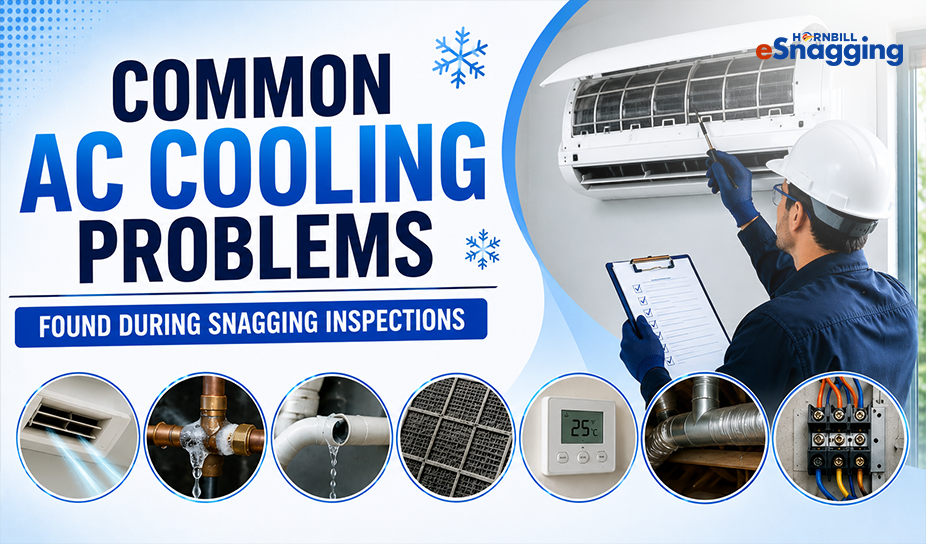
In Oman’s hot climate, air conditioning is not a luxury — it is an essential part of everyday comfort. Whether it is a newly constructed villa, apartment, office, or commercial property, buyers expect the AC system to function efficiently from day one. However, many newly handed-over properties contain hidden cooling issues that are often missed during construction.
This is where snagging inspections become extremely important.
A professional snagging inspection helps identify defects, installation mistakes, and performance problems before the property handover is finalized. Among the most common issues detected during snagging inspections in Oman are AC cooling problems, which can lead to discomfort, higher electricity bills, water leakage, poor indoor air quality, and expensive repairs later.
According to the U.S. Department of Energy, heating and cooling systems account for nearly 50% of energy use in many buildings, making HVAC efficiency critical for both comfort and operational cost savings (Source).
In Oman’s extreme temperatures, even small AC defects can quickly become major problems if left unresolved. In this blog, we explore the most common AC cooling problems found during snagging inspections and why professional inspections are essential before moving into a new property.
Why AC Inspection is Important During Property Snagging
Many property owners assume that a new building automatically means a perfect AC system. Unfortunately, that is not always the case.
Construction deadlines, poor workmanship, improper installation, and lack of testing often result in HVAC defects that remain unnoticed until the property is occupied.
AC-related snagging inspections help identify:
- Cooling inefficiency
- Improper installation
- Water leakage
- Airflow problems
- Electrical defects
- Poor insulation
- Hidden maintenance issues
Detecting these issues early can save significant repair costs and improve long-term HVAC performance.
Common AC Cooling Problems Found During Snagging Inspections
1. Weak or Uneven Cooling
One of the most common complaints in newly handed-over properties is inconsistent cooling across rooms.
During snagging inspections, inspectors often identify:
- Poor airflow
- Incorrect AC sizing
- Blocked vents
- Duct leakage
- Improper thermostat placement
Some rooms may feel excessively cold while others remain warm. This usually indicates airflow imbalance or duct installation issues.
According to HVAC industry reports, blocked or leaking ducts can significantly reduce cooling efficiency and increase energy consumption.
Common Signs:
- Certain rooms cool slower
- Weak airflow from vents
- Hot spots inside the property
- AC running continuously without proper cooling
2. Refrigerant Leaks
Refrigerant is essential for cooling performance. Low refrigerant levels usually indicate leakage within the AC system.
Refrigerant leaks are among the most frequently discovered HVAC defects during inspections. These leaks may occur because of:
- Poor pipe connections
- Damaged copper tubing
- Improper installation
- Manufacturing defects
The U.S. Department of Energy states that refrigerant leaks reduce efficiency, damage compressors, and negatively impact system performance (Source).
Common Signs:
- Warm air from vents
- Ice formation on pipes
- Hissing sounds
- Higher electricity usage
- Reduced cooling performance
In Oman’s climate, refrigerant-related issues can quickly become severe because AC systems operate for long hours throughout the year.
3. Improper AC Drainage and Water Leakage
Water leakage around indoor AC units is another common issue detected during snagging inspections.
Air conditioners produce condensation during cooling, and this water must drain properly through condensate lines. Poor installation or clogged drain lines can result in:
- Water leakage
- Ceiling stains
- Wall damage
- Mold growth
- Unpleasant odors
Experts identify clogged condensate drains as one of the most common HVAC maintenance problems.
Common Signs:
- Water dripping from indoor units
- Damp ceilings or walls
- Musty smells
- Excess humidity indoors
In newly constructed buildings, drainage slope errors and improper piping are frequently responsible for these problems.
4. Dirty or Blocked Air Filters
Although filters may seem like a minor component, clogged or dirty filters can significantly affect cooling performance.
Construction dust often accumulates inside AC filters before the property handover is completed. During snagging inspections, dirty filters are commonly found in properties that were not properly cleaned after construction work.
Blocked filters can cause:
- Reduced airflow
- Increased energy consumption
- Poor indoor air quality
- Overworked AC systems
HVAC experts consistently identify dirty filters as one of the most common causes of cooling inefficiency.
Common Signs:
- Weak airflow
- Dust accumulation indoors
- Increased cooling time
- Unusual AC strain or noise
5. Faulty Thermostat Installation
Thermostats control indoor temperature, but incorrect installation can lead to inaccurate readings and inconsistent cooling.
Common snagging issues include:
- Thermostat placed near sunlight
- Incorrect calibration
- Wiring defects
- Faulty sensor positioning
Improper thermostat placement can cause the AC system to cycle incorrectly, leading to poor comfort and higher electricity costs.
Common Signs:
- Incorrect room temperature readings
- AC turning on and off frequently
- Rooms feeling warmer than the thermostat setting
6. Ductwork Defects and Air Leakage
Duct systems distribute cooled air throughout the property. During snagging inspections, inspectors frequently discover:
- Loose duct connections
- Air leakage
- Poor insulation
- Crushed ducts
- Improper duct sizing
These issues reduce airflow efficiency and force the AC system to work harder.
Industry reports indicate that damaged or leaking ductwork contributes significantly to cooling inefficiency and uneven temperature distribution.
Common Signs:
- Uneven cooling
- Dust buildup
- Higher energy bills
- Noise inside ceilings or ducts
7. Incorrect AC Unit Sizing
Proper AC sizing is critical in Oman due to the high outdoor temperatures.
An undersized AC unit struggles to cool the space efficiently, while an oversized unit cycles too quickly and fails to remove humidity effectively.
During snagging inspections, inspectors sometimes identify systems that were incorrectly selected for the room size or building layout.
Problems Caused by Incorrect Sizing:
- High electricity bills
- Poor comfort levels
- Increased wear and tear
- Reduced system lifespan
Inadequate heating and cooling caused by improperly sized HVAC systems is a commonly reported issue in building inspections.
8. Electrical and Wiring Problems
HVAC systems rely heavily on electrical components. Poor electrical work can create safety hazards and performance failures.
Inspectors commonly find:
- Loose electrical connections
- Improper wiring
- Faulty breakers
- Poor insulation
- Corroded terminals
Electrical failures are considered one of the most serious HVAC issues because they can cause system breakdowns or even fire risks.
Common Signs:
- AC not turning on
- Frequent tripping
- Burning smell
- Intermittent cooling
Comparison: Minor vs Major AC Snagging Issues
| Issue Type | Minor Problems | Major Problems |
|---|---|---|
| Cooling Performance | Dirty filters | Incorrect unit sizing |
| Water Leakage | Small drain blockage | Improper drainage installation |
| Airflow | Vent obstruction | Duct leakage or damaged ducts |
| Electrical | Loose wiring | Faulty electrical systems |
| Refrigerant | Low refrigerant | Major refrigerant leakage |
| Thermostat | Calibration issue | Faulty sensor or wiring |
Why AC Problems Are Common in New Properties
Several factors contribute to AC defects in newly constructed buildings:
- Tight construction deadlines
- Incomplete testing
- Poor installation practices
- Lack of commissioning
- Dust accumulation during construction
- Low-quality workmanship
In some cases, HVAC systems are installed correctly but not properly tested before handover.
This is why independent snagging inspections are important before accepting a property.
Benefits of Professional Snagging Inspections
Professional snagging inspections help property owners:
- Detect hidden HVAC defects
- Avoid expensive future repairs
- Improve cooling efficiency
- Ensure safety compliance
- Increase indoor comfort
- Reduce long-term maintenance costs
A detailed snagging report also helps property owners request corrections from developers before the warranty or defect liability period expires.
Conclusion
In Oman’s climate, a properly functioning AC system is essential for comfort, health, and energy efficiency. Unfortunately, many new properties contain hidden cooling issues that are only discovered after occupancy.
Weak cooling, refrigerant leaks, drainage problems, airflow defects, faulty thermostats, and electrical issues are among the most common AC problems identified during snagging inspections. Identifying these issues early can save property owners from costly repairs, discomfort, and long-term HVAC inefficiencies.
At Hornbill eSnagging, we provide professional snagging inspection services in Oman designed to identify hidden property defects before handover. Our detailed inspections help ensure your AC system, electrical components, plumbing, finishes, and overall property quality meet expected standards — giving you peace of mind before moving into your new home or commercial space.